Start with the supplied form
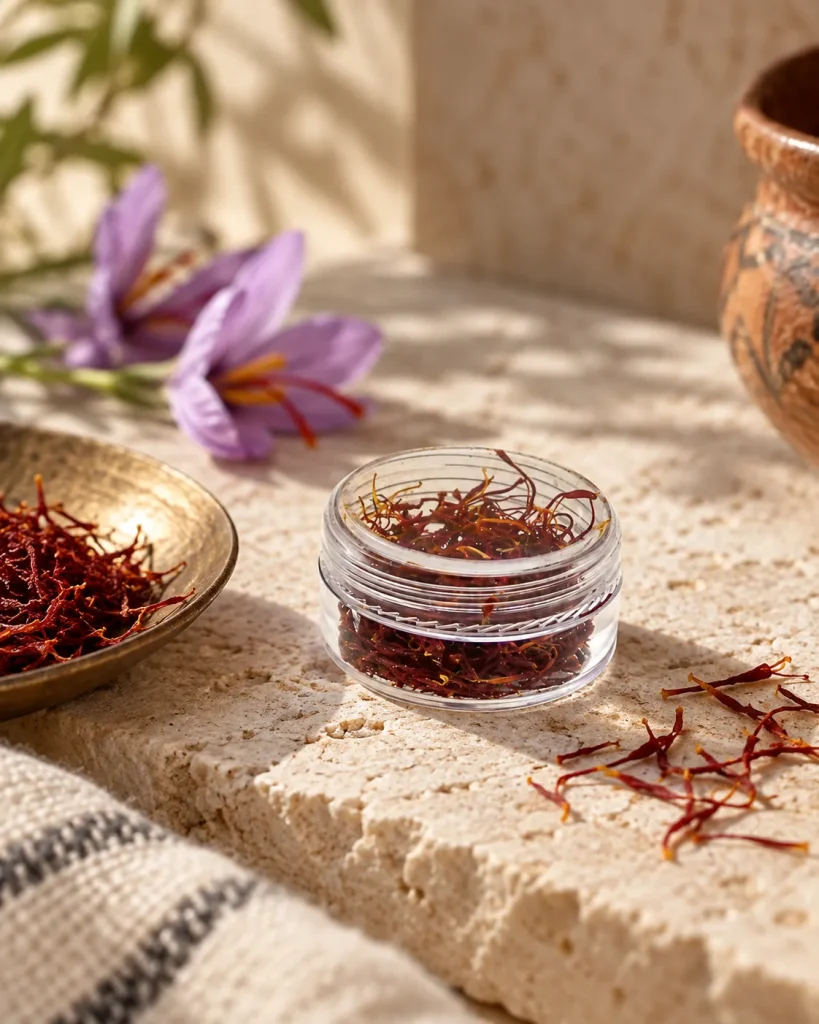
Saffron is a dried floral spice of Crocus sativus. It is sold in filaments, cut filaments and powder. A useful cooking method must identify which form is being used. Our confirmed pack size is 2 g; that fact does not establish its supplied form or tell you how much belongs in one dish.
If using filaments
Some recipes first disperse filaments in a little warm cooking liquid, then add that liquid to the dish. Others incorporate them during hydration. Ottolenghi’s winter couscous provides a concrete example of the latter: saffron threads are included before hot vegetable stock is poured over the grain and the bowl is covered.
If using powder
Powder needs even distribution in the dish’s liquid. It cannot be handled as though it were intact threads that will remain visible. Follow a recipe written for the form you have and adjust to the amount of food being prepared; do not use the net pack weight as a serving instruction.
Give saffron room
A broth-based rice dish, a sauce or a dessert allows saffron to have a clear culinary role. Decide which other seasonings are necessary rather than adding a second strong blend automatically. A recipe example establishes a possible method, not the measured aroma or colouring strength of a particular lot.
Quality and storage
ISO 3632-1:2025 is the current specifications edition, replacing the 2011 Part 1. ISO 3632-2:2010 is a separate test-method document. Reading a standard’s public scope does not certify our pack. Regional origin, harvest year and grade need lot-specific evidence. Keep saffron sealed, dry and protected from light, retaining its date and lot information. A home water test is not a grade certificate.