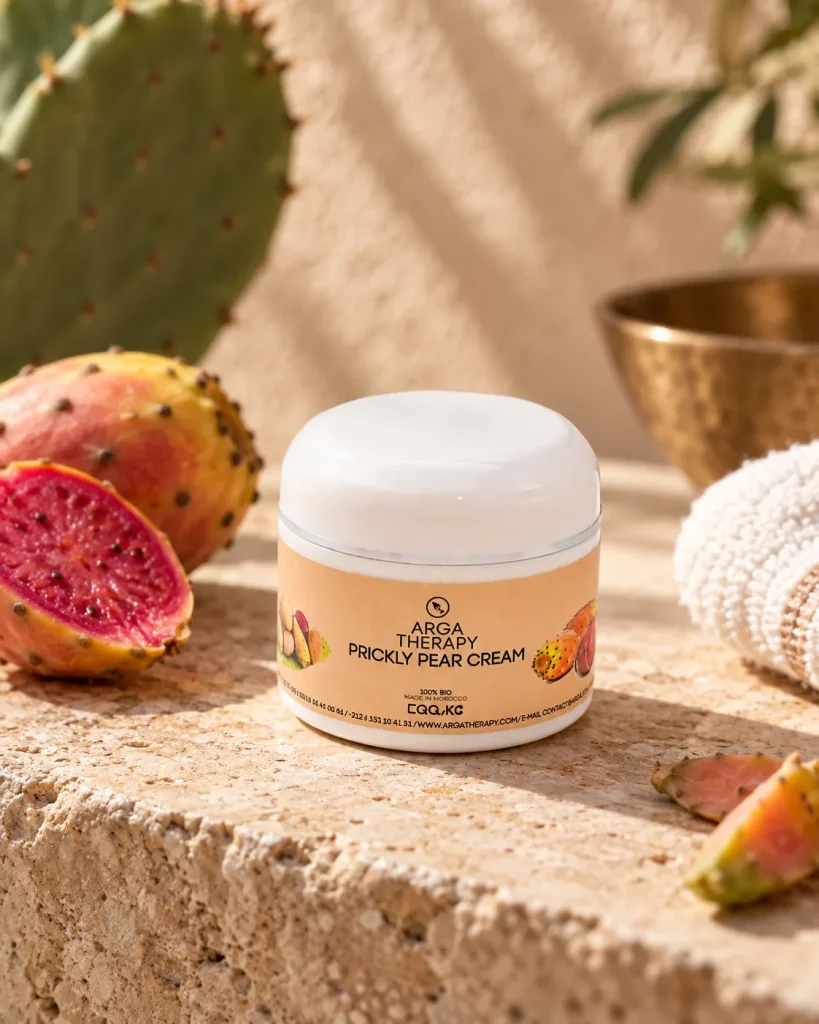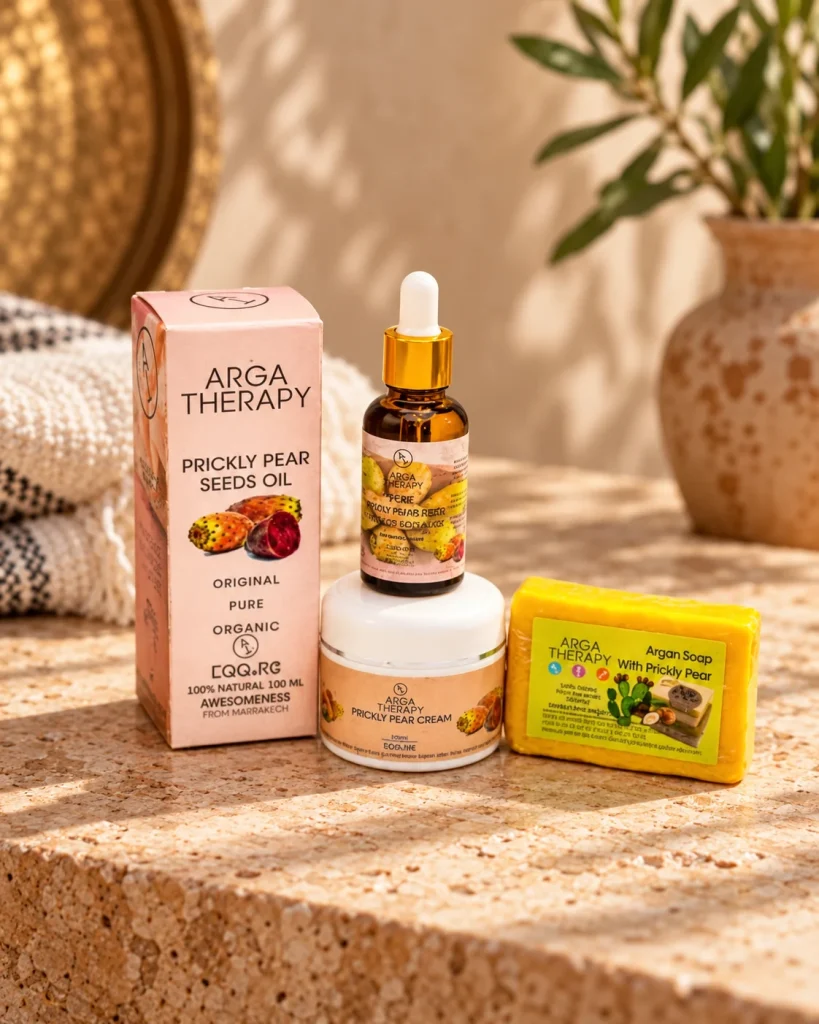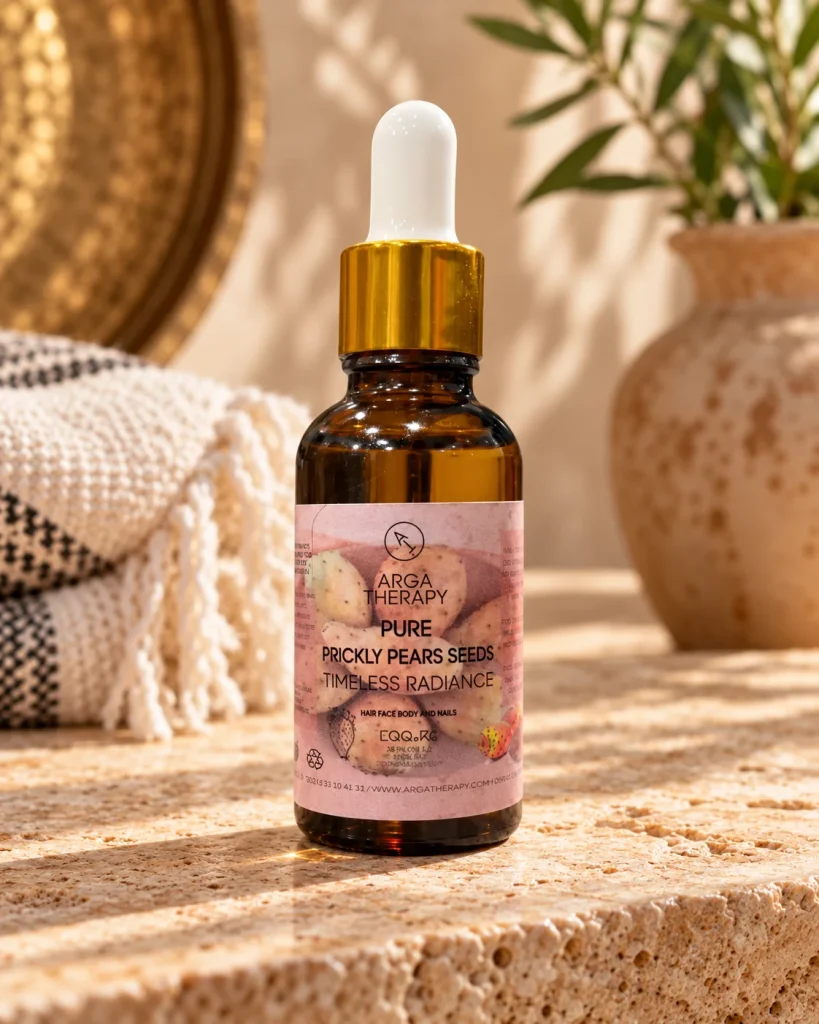
Identify the material
Our reference is labelled 100% pure prickly pear seed oil. That identifies an oil from the seeds, not fruit juice, a pulp extract or a macerate in another carrier. It also does not identify the composition of the separate cream, soap or set.
A study of six origins
Nounah and colleagues examined seeds from six Moroccan cooperative sites. They collected seeds in June 2017 and pressed oils mechanically for chemical and stability measurements. The oils showed a lipid profile dominated by linoleic and oleic acids, with variation in components such as tocopherols. These are findings about research samples.
Separate the measurements
Fatty-acid analysis describes composition. Accelerated oxidation measures behaviour under an experimental condition. A DPPH assay in that work assessed seed extracts. None is a human trial showing that our bottle removes wrinkles, treats acne or fades marks. A seed-extract result should not be relabelled as a demonstrated effect of seed oil on skin.
What this means when choosing
Choose the product for its established oil identity and the preparation form you want, rather than a spectacular unverified ratio of fruit to oil or a comparison with another oil’s vitamin content. A batch analysis would be needed for a quantitative claim about the bottle sold.
Care of an oil
Keep the container closed, protected from heat and light, without adding water. The research supports attention to oxidation; its cold laboratory storage is not a validated consumer shelf life. Follow the pack date and period after opening. No exact duration is invented here.